
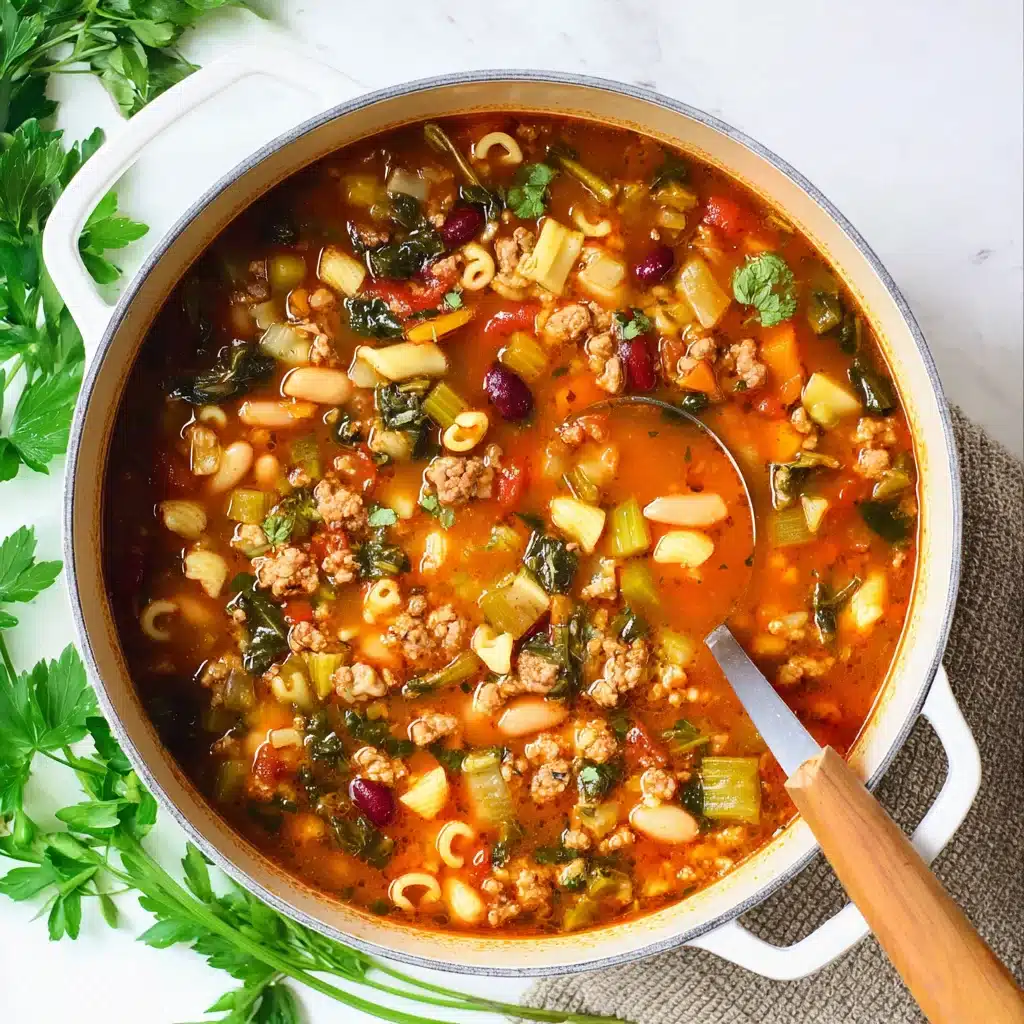
Pasta Italian soup isn’t just a meal, it’s a tradition carried in every spoonful. Whether it’s a brothy bowl of minestrone or a hearty pasta e fagioli, this comforting dish captures the heart of Italian home cooking. In this article, you’ll discover how to make a flavorful, nutrient-packed soup using humble ingredients like beans, sausage, and pasta. We’ll walk through the essential ingredients, traditional variations, cooking methods, and expert tips to help you create your own version of this Italian staple. Plus, you’ll learn why pasta is not just an addition, but the soul, of every great Italian soup.
Stirring Up Memories of Pasta Italian Soup
From Nonna’s Stove to My Soup Pot
Ciao! I’m Alessia Romano, born just outside Bologna, where the scent of simmering ragù and brothy soups filled every Sunday. As a child, I’d stand on a stool beside my nonna, watching her stir her famous zuppa di pasta. She’d say, “La pasta ascolta l’amore”, pasta listens to love. And it did.
One of her most-loved soups used spicy sausage, diced vegetables, and elbow macaroni, finished with a shower of grated Parmigiano-Reggiano. That memory stuck with me, and today, every time I make pasta Italian soup, I feel her hands guiding mine.
I now share this warmth with my students and readers. This soup has traveled from our small Emilia-Romagna kitchen to kitchens across the U.S. It’s easy to adapt and full of flavor. Whether you follow a classic minestrone path or a rustic sausage-bean combo, it’s all about balance: richness from sausage, brightness from tomato, and earthiness from beans and herbs.
Looking to make it tonight? Just check what you already have. A few pantry staples and 30–40 minutes is all it takes to create a bowl of soulful comfort. If you love the feeling of meals that bring people together, this one will become your go-to.
The Allure of Italy’s Most Loved Soup Tradition
Across Italy, soup isn’t a side, it’s a centerpiece. From Venice to Sicily, families pass down recipes like minestra, pasta e ceci, or zuppa contadina. One thing unites them all: pasta in soup is a way of life.
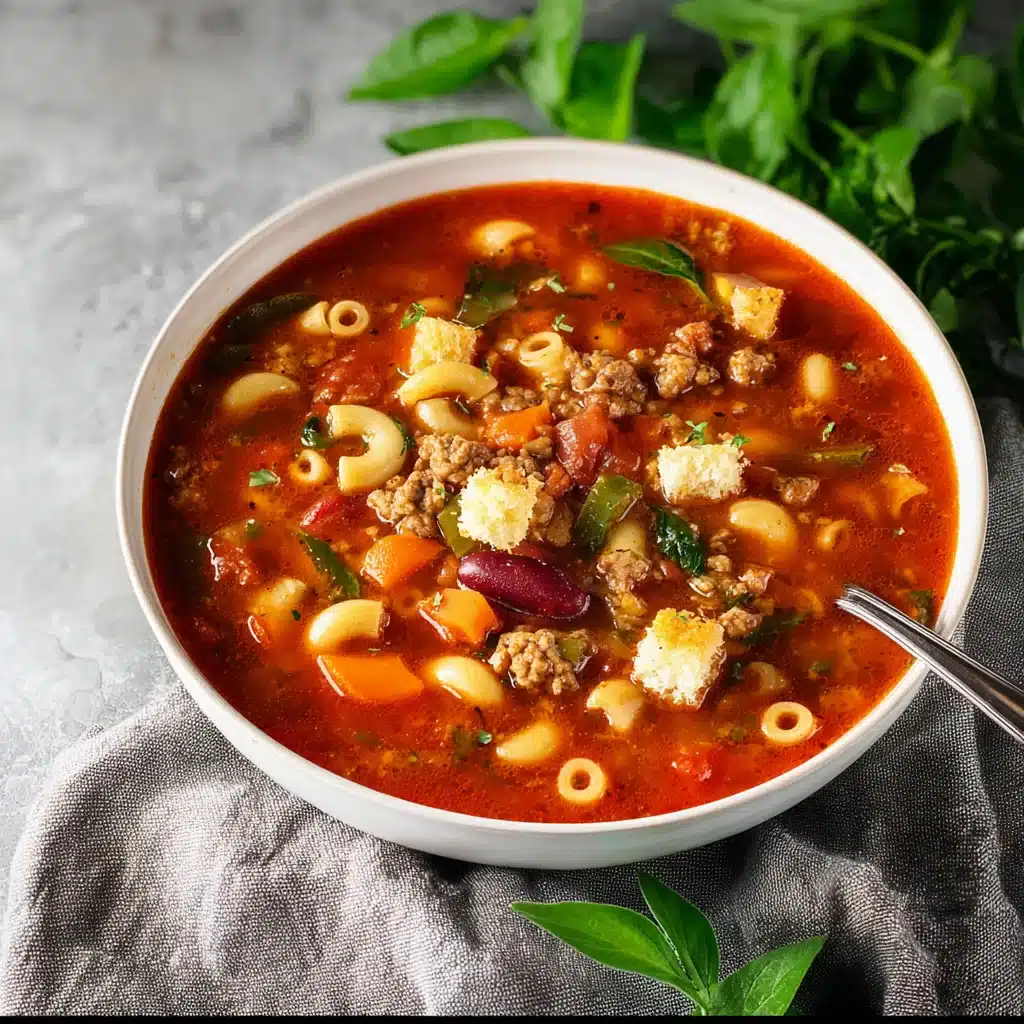
A classic pasta Italian soup combines simple ingredients, vegetables, beans, and pasta, with deep, layered flavor. The key lies in how the base is built. Olive oil, sautéed with finely diced onion, carrot, and celery, forms the soffritto, a foundational trio in Italian cuisine. Into that, garlic adds punch, and tomato sauce brings sweetness and acidity. Then come the stars: cannellini beans, kidney beans, sausage, and chicken broth.
This type of soup feeds crowds, heals colds, and welcomes friends. It’s flexible enough for weeknights yet rich enough for a Sunday meal. Italians often say, “A tavola non si invecchia”, at the table, one doesn’t grow old. That’s the kind of joy this soup brings.
Curious which pasta works best? Short pasta like ditalini or elbow macaroni holds up beautifully in broth. Stir in fresh parsley, finish with a grating of Parmigiano-Reggiano, and you’re there.
Print
Pasta Italian Soup – 1 Comforting Classic You’ll Crave
- Total Time: 40 minutes
- Yield: 6 servings 1x
Description
This traditional pasta Italian soup blends sausage, beans, and pasta in a savory broth with fresh herbs. Comfort food at its best.
Ingredients
2 tbsp olive oil
1 lb mild or spicy ground turkey or chicken sausage
1 large yellow onion, finely diced
2 medium carrots, finely diced
2 celery ribs, finely diced
4 cloves garlic, minced
5 cups low-sodium chicken broth
1 (15 oz) can cannellini beans, rinsed
1 (15 oz) can red kidney beans, rinsed
1 (14 oz) can diced tomatoes with juice
1/2 cup tomato sauce
Salt & pepper to taste
2 bay leaves
1 tsp fresh rosemary, minced
1 tsp fresh thyme, minced
1 cup ditalini or elbow pasta
2 tbsp fresh Italian parsley, chopped
1/4 cup freshly grated Parmigiano-Reggiano
Crushed red pepper (optional)
Instructions
1. Heat olive oil in a large pot over medium heat. Add onion, carrots, and celery. Sauté until soft.
2. Add garlic and cook for 1 minute. Add sausage, breaking it up and cooking until browned.
3. Stir in diced tomatoes, tomato sauce, chicken broth, beans, bay leaves, rosemary, and thyme.
4. Bring to a boil, then reduce heat and simmer uncovered for 15–20 minutes.
5. Add pasta and cook until al dente, about 7–9 minutes.
6. Stir in parsley and grated Parmigiano. Remove bay leaves. Adjust seasoning.
7. Serve hot with extra cheese and crushed red pepper if desired.
Notes
For leftovers, store pasta separately to avoid sogginess. Add fresh pasta when reheating for best texture.
- Prep Time: 10 minutes
- Cook Time: 30 minutes
- Category: Soup
- Method: Stovetop
- Cuisine: Italian
Nutrition
- Serving Size: 1 bowl
- Calories: 410
- Sugar: 6g
- Sodium: 780mg
- Fat: 18g
- Saturated Fat: 5g
- Unsaturated Fat: 11g
- Trans Fat: 0g
- Carbohydrates: 38g
- Fiber: 8g
- Protein: 24g
- Cholesterol: 35mg
Keywords: pasta Italian soup, Italian soup, sausage bean soup
What Makes an Italian Pasta Soup Truly Italian
The Secret’s in the Base: Broth, Beans, and Flavor
If you’re aiming for real Italian flavor, start where every Italian cook does: with the base. At the heart of every traditional pasta Italian soup lies soffritto, a mixture of finely diced onion, carrot, and celery, gently sautéed in olive oil. This isn’t just for aroma, it’s where flavor begins.
Once the vegetables soften and their sugars release, stir in garlic and a bit of tomato sauce. This combo brings warmth and acidity. Now comes the richness: either ground turkey or chicken sausage, browned and crumbled, brings protein and bold seasoning. You’ll want to remove the casings first for a smoother texture.
Next, pour in low-sodium chicken broth, a base that’s both clean and flavorful. Add your cannellini beans, red kidney beans, and diced tomatoes. For seasoning, toss in bay leaves, rosemary, thyme, and a pinch of crushed red pepper if you like a little heat.
It’s a symphony of ingredients that play together, none overpowering, each enhancing the other. Whether you’re following a family recipe or trying one from your favorite food site, if it starts with this classic build, you’re already halfway to Italy.
Pasta in Soup: A Non-Negotiable
Ask any Italian and they’ll tell you, yes, we absolutely put pasta in soup! It’s not a garnish; it’s the heart of the meal. Adding pasta turns soup into a true piatto unico, a one-dish wonder that’s both satisfying and soul-warming.
But not all pasta shapes are created equal. In brothy soups, size matters. Ditalini, elbow macaroni, and small shells are ideal. They cook quickly, absorb just enough liquid, and hold up beautifully without getting mushy. Plus, their small size makes every spoonful balanced.
To keep pasta from overcooking, add it only during the last 10 minutes of simmering. Or, if you’re prepping for the week, cook it separately and add just before serving. Italians do this too, it preserves texture.
The final flourish? Parmigiano-Reggiano, freshly grated and stirred into the hot soup. This cheese melts slightly, giving body and an umami kick. Some also finish with chopped Italian parsley or a drizzle of good olive oil. The result: comforting, flavorful, and undeniably Italian.
Cooking Pasta Italian Soup at Home
Ingredient Deep Dive and Best Substitutes
Making an authentic pasta Italian soup at home doesn’t require any special equipment or fancy skills, just a well-stocked pantry and some cozy intention. This soup is flexible, hearty, and easily adapted to what you have on hand.
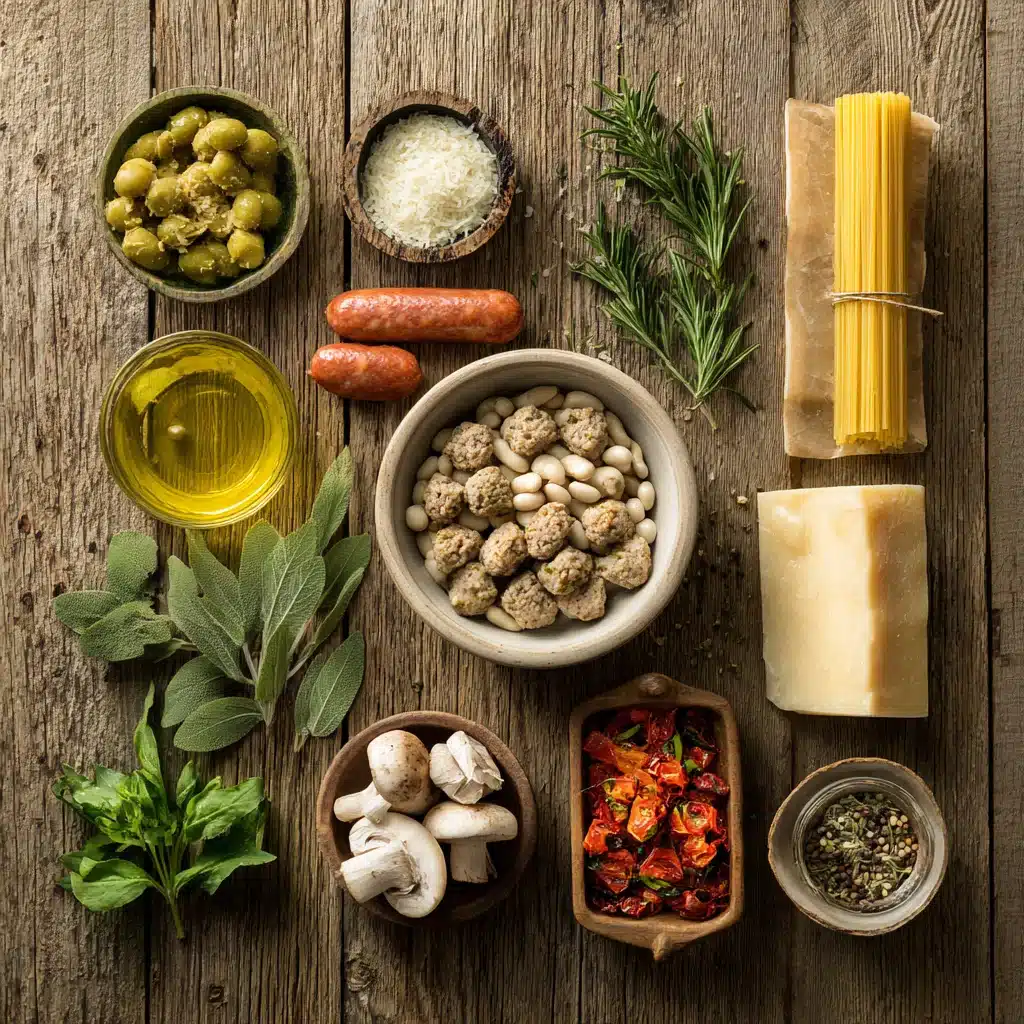
Here’s what goes into a flavorful bowl of pasta Italian soup:
- Olive oil – for building the base
- Ground turkey or chicken sausage – spicy or mild, your choice
- Yellow onion, carrots, celery – finely chopped for the essential soffritto
- Garlic, minced – to deepen the savory flavor
- Low-sodium chicken broth – a clean, rich base for the soup
- Canned diced tomatoes and tomato sauce – add body and brightness
- Cannellini beans and red kidney beans, rinsed – for creaminess and bite
- Bay leaves, rosemary, and thyme – for herby depth
- Dried pasta, like ditalini or elbow macaroni – the heart of the dish
- Italian parsley, chopped – for freshness
- Parmigiano-Reggiano, grated – stirred in and sprinkled on top
- Crushed red pepper – optional for a spicy edge
Need to substitute? No problem. You can use veggie broth for a plant-based version or swap sausage with lentils or plant-based crumbles. No ditalini on hand? Small shells, orzo, or even broken spaghetti work just as well.
This balance of ingredients turns a simple meal into the warm, comforting pasta Italian soup that generations of Italian kitchens are known for.
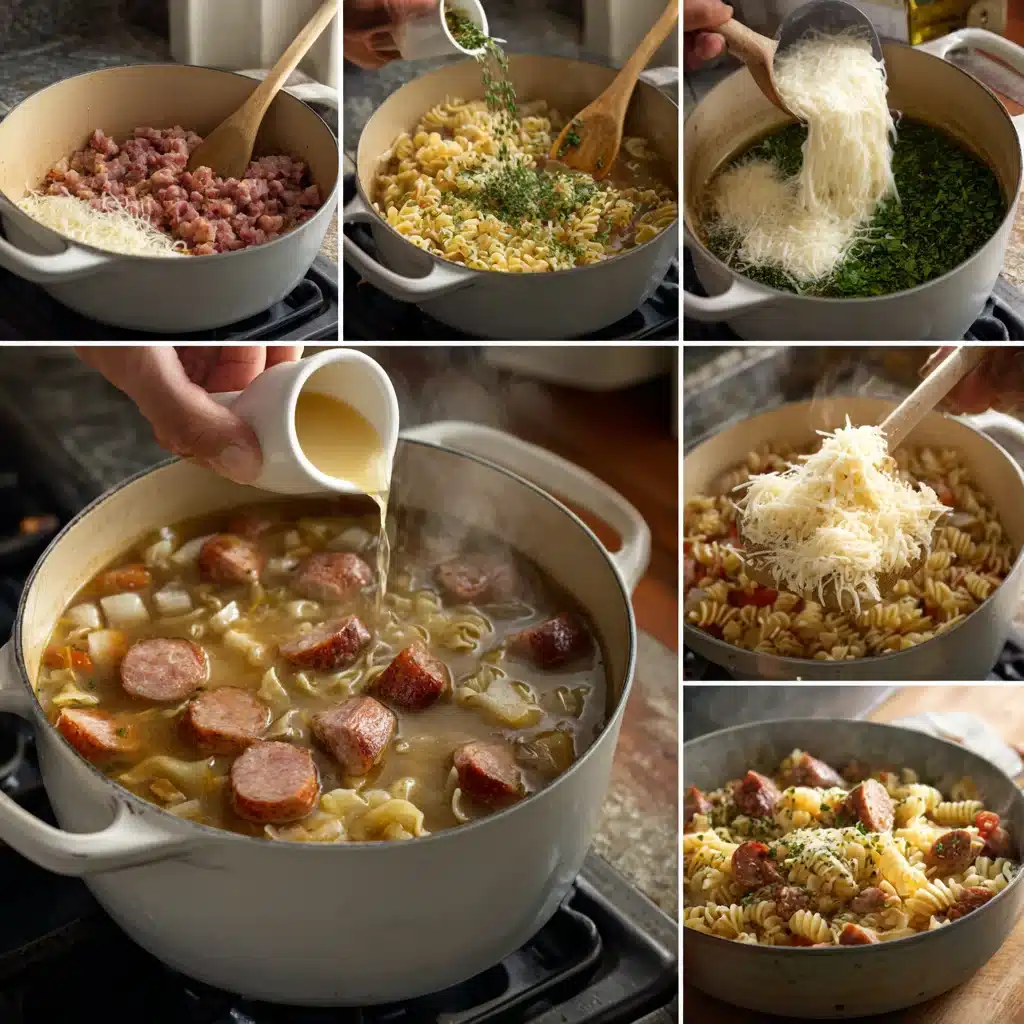
Step-by-Step Cooking Tips
Cooking pasta Italian soup is as satisfying as eating it. The whole house fills with the inviting aroma of herbs, tomatoes, and simmering broth, and in less than an hour, you’re sitting down to something truly soul-soothing.
Step 1:
Heat olive oil in a large pot over medium. Add onion, carrots, and celery. Sauté for 6–8 minutes until softened. Stir in garlic and cook for another minute.
Step 2:
Add ground sausage and cook until browned, breaking it apart with a spoon. Let it fully caramelize, it brings out the soup’s depth.
Step 3:
Pour in the diced tomatoes, tomato sauce, and chicken broth. Add cannellini and kidney beans, bay leaves, rosemary, thyme, and season with salt and pepper.
Step 4:
Bring it all to a gentle boil, then reduce to a simmer. Let it cook uncovered for 15–20 minutes so flavors meld.
Step 5:
Add your pasta directly into the pot. Let it cook until al dente, usually about 7–9 minutes depending on the shape.
Step 6:
Stir in Italian parsley and a generous handful of Parmigiano-Reggiano. Remove bay leaves. Adjust seasoning to taste.
Step 7 (Optional):
Add crushed red pepper or an extra drizzle of olive oil for richness. Serve piping hot.
Want leftovers? Store your pasta Italian soup in the fridge for up to four days. It reheats beautifully, and the flavors only deepen over time.
Serving, Pairing, and Storing Pasta Italian Soup
How to Serve It Like an Italian
Serving pasta Italian soup is about more than filling a bowl, it’s a moment of connection, warmth, and tradition. In Italy, this soup often opens Sunday lunch, shared with family at long wooden tables, windows open to the garden, and Parmigiano passed from hand to hand.
To serve it the authentic way, start with warmed bowls, yes, warm them. This keeps the soup hot and the flavors vibrant. Ladle the soup generously, making sure each bowl gets an even balance of broth, beans, sausage, and pasta.
Top with a drizzle of extra virgin olive oil, a sprinkle of fresh parsley, and, of course, a heavy hand of grated Parmigiano-Reggiano. For those who like a little heat, add a pinch of crushed red pepper flakes right at the table.
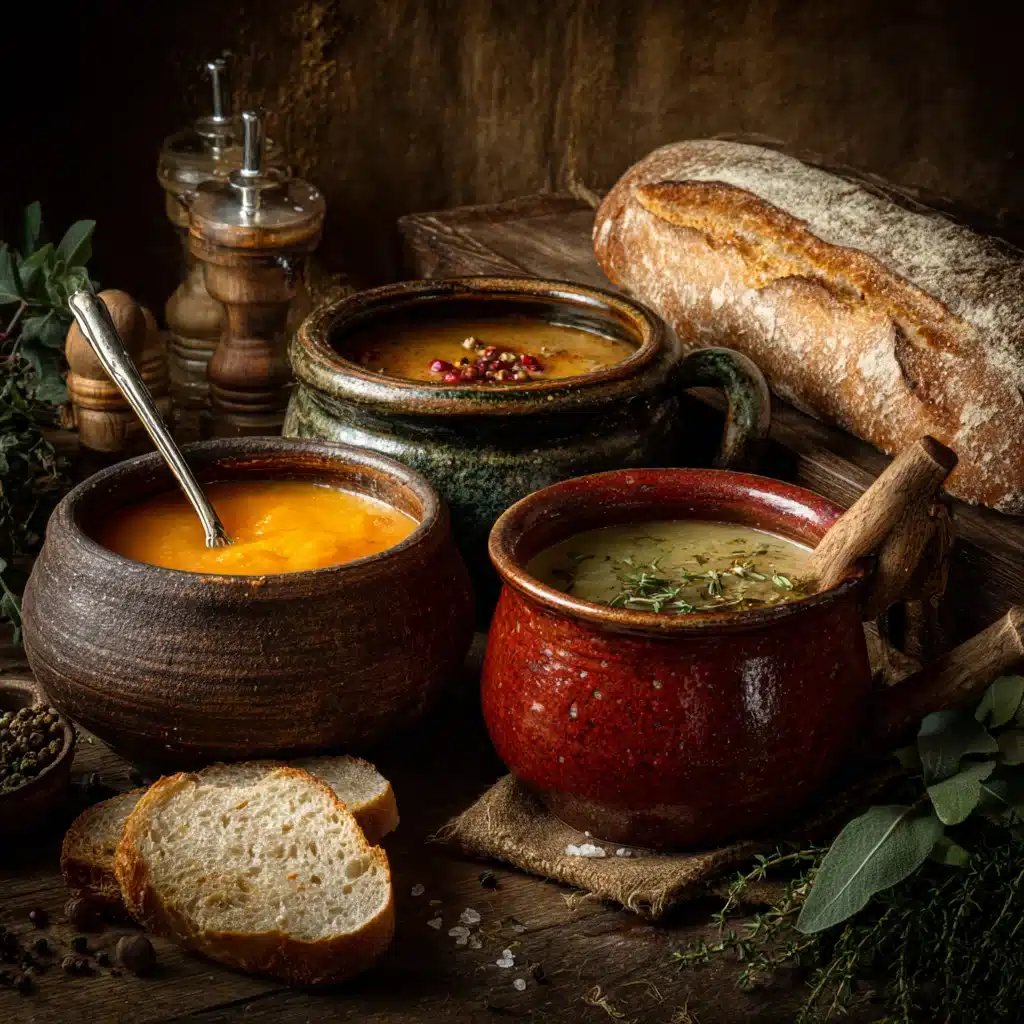
Pair your pasta Italian soup with a rustic Italian loaf, preferably one with a good crust, and a simple green salad tossed with olive oil and lemon. If you’re serving this as a main dish, follow it with a light dessert like fresh fruit or biscotti with espresso.
This soup is generous, filling, and doesn’t need much else to shine.
Storage and Reheating Tips
One of the best parts of pasta Italian soup is that it tastes even better the next day. The flavors deepen, the broth thickens slightly, and the dish becomes even more comforting. But you’ll want to store and reheat it the right way.
Fridge:
Let the soup cool completely, then transfer it to airtight containers. It will keep in the refrigerator for 3–4 days.
Freezer:
For longer storage, freeze in portion-sized containers for up to 3 months. If you plan to freeze it, cook the pasta separately and add it when reheating. Otherwise, the pasta will absorb too much broth and turn mushy.
Reheating:
Warm gently on the stovetop over medium-low heat. Add a splash of chicken broth or water to thin the soup, as pasta continues to absorb liquid during storage.
Quick Tip:
If you expect leftovers, only add pasta to the portion you’ll serve immediately. Store the rest of the soup base separately and boil fresh pasta as needed, it’s what many Italian home cooks do.
Bonus Tip: Label your containers with the date and pasta type used so you can rotate soups and avoid waste.
Conclusion
Whether you’re new to Italian cooking or revisiting an old family recipe, pasta Italian soup is a dish that delivers comfort, flavor, and history with every spoonful. From the sautéed soffritto base to the tender beans and perfectly cooked pasta, this soup is the definition of nourishing. It’s quick enough for a weeknight and special enough for a Sunday dinner. So next time the weather turns or your heart needs something warm, reach for your pot and make this simple Italian classic. It’s not just food; it’s love in a bowl.
FAQs : Pasta Italian Soup
What is the pasta soup called?
In Italy, pasta soup is most commonly known as pasta e fagioli (pasta and beans) or minestrone, a hearty vegetable soup with pasta. Both are beloved across the country and vary by region.
What is a traditional Italian soup called?
Traditional Italian soups include minestrone, ribollita, pasta e ceci (pasta with chickpeas), and stracciatella. Each region of Italy offers its own specialties based on local ingredients.
Do Italians put pasta in soup?
Yes, absolutely! Adding pasta to soup is a staple of Italian cooking. Short shapes like ditalini or elbow macaroni are traditional and help create a well-balanced bite in every spoonful.
What is the best pasta for Italian soup?
Small pasta shapes such as ditalini, elbow macaroni, orzo, and small shells are best for Italian soups. They cook quickly and hold their texture well in hot broth.