
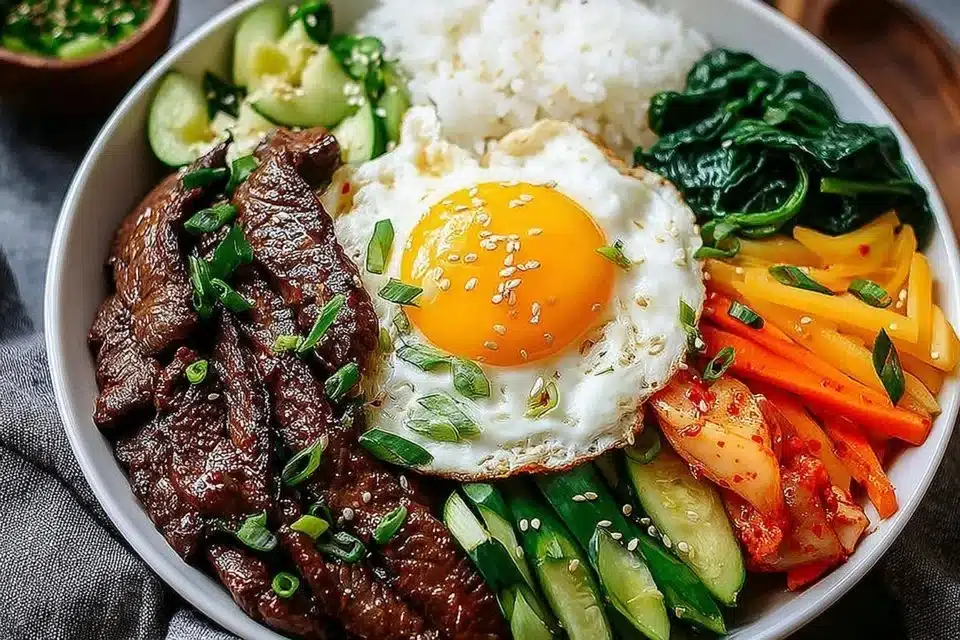
Growing up, I always had a fascination with the vibrant colors and flavors of the culinary world. It was during my travels to Seoul that I first tasted Easy Korean Bibimbap, a dish that felt like a beautiful harmony of texture and taste.
The moment I mixed the glossy, warm rice with the crisp, colorful vegetables and tender beef, I knew I had encountered something special. The bowl sparkled with fresh herbs and the spicy kick of gochujang, sending my senses into a whirl of delight. Each bite was not just a nourishment of the body, but also a celebration of culture—a comforting embrace that rushed me back to those joyful moments in the kitchen with my loved ones.
Flavor and Popularity
The Unique Flavor Profile of Easy Korean Bibimbap
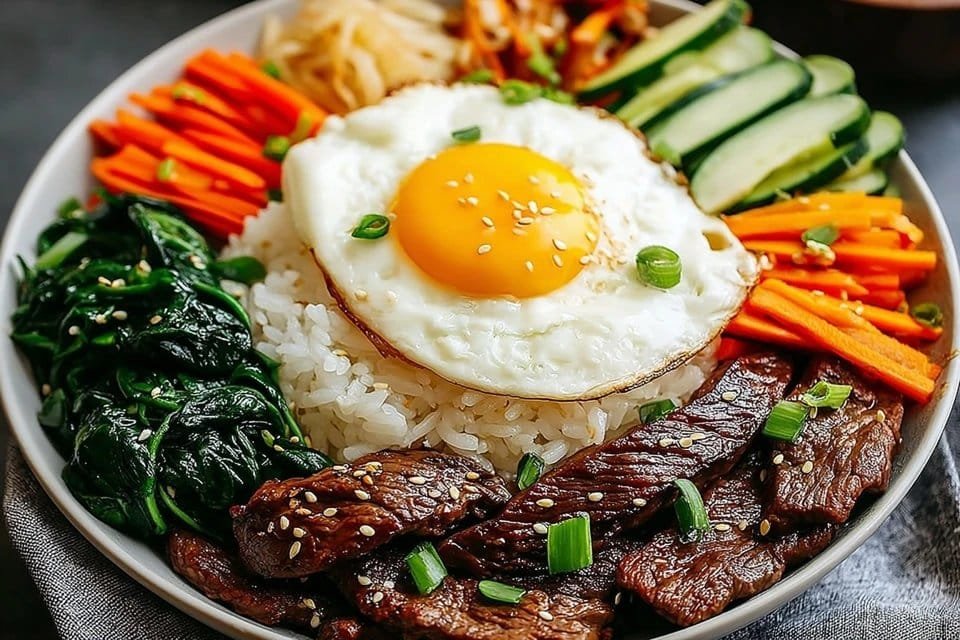
Easy Korean Bibimbap is often likened to a canvas, waiting for the artist to add nature’s vibrant palette. This dish is a symphony of textures and flavors—fluffy rice mingling with crunchy vegetables like carrots and cucumbers, earthy mushrooms, and beautifully marinated beef or tofu. You might find each spoonful reminiscent of sunny days and family gatherings. It embodies umami with the savory depth of sesame oil and the gentle heat from the fermented gochujang sauce. Every ingredient plays a role, crafting a delightful balance between freshness and warmth that is utterly satisfying.
Why This Recipe Is a Family Favorite and Crowd-Pleaser
There’s a reason Easy Korean Bibimbap often makes an appearance at family gatherings and potlucks—it’s a dish that invites everyone to the table. It allows for personalization; guests can choose their toppings, mixing their preferences into the rice, fostering a sense of community. As the creator, I guide each person to explore flavors, and in doing so, bond over the act of sharing. Furthermore, its vibrant colors make it as visually inviting as it is delicious. When I serve this dish, I can feel the warmth of conversation igniting as loved ones dive into a communal bowl of comfort.
Ingredients and Preparation
Essential Ingredients and Possible Substitutions
Creating the perfect Easy Korean Bibimbap can be done with some essential ingredients. Here’s what you need:
- Cooked Rice: 2 cups, preferably short-grain to maintain moisture.
- Protein: 1 cup, beef (bulgogi style), chicken, or tofu works beautifully.
- Vegetables: Mixed options such as:
- Spinach (can be replaced with kale)
- Carrots (can use zucchini)
- Cucumber
- Mushrooms (shiitake or oyster for their earthy flavors)
- Egg: 2 fried eggs for that delicious creaminess (or omit for a vegan option).
- Gochujang: Korean chili paste that adds depth.
- Sesame Oil: For drizzling and flavor.
Feel free to swap certain ingredients based on availability or preference. Enjoy the journey of exploration!
Step-by-Step Recipe Instructions with Tips
Step 1: Prepare the Rice
- Rinse 1 cup of short-grain rice until the water runs clear.
- Cook in a rice cooker or on the stovetop according to the package instructions. Set aside.
Step 2: Sauté the Vegetables
- In a skillet, heat a tablespoon of sesame oil over medium heat.
- Add the mushrooms and cook until tender. Follow by adding carrots and spinach, sautéing until they become vibrant and slightly soft.
Step 3: Cook the Protein
- In a separate pan, cook your choice of protein seasoned with a touch of soy sauce and pepper until perfectly cooked.
Step 4: Prepare the Eggs
- Fry eggs sunny-side up in a small amount of oil until the whites are set but the yolks remain soft.
Step 5: Assemble the Bowl
- Start with a base of rice, layering the sautéed vegetables, protein, and top with the fried egg. Add a dollop of gochujang on top and a sprinkle of sesame seeds.
Step 6: Serve and Enjoy
- Mix everything together before diving in, allowing the egg to coat the bowl. Serve with extra gochujang and sesame oil on the side.
Cooking Techniques and Tips
How to Cook Easy Korean Bibimbap Perfectly
Cooking Easy Korean Bibimbap involves balancing textures and ensuring freshness. For perfectly cooked vegetables, remember to sauté them separately, preserving their distinct flavors. A hot skillet helps keep the vegetables crisp. Don’t skip the gochujang—it’s the heart of this dish, adding a spicy kick and delightful aroma.
Common Mistakes to Avoid
- Overcooking the vegetables can lead to mushiness. Aim to keep them vibrant.
- Using long-grain rice will change the texture. Stick to short-grain for authenticity.
- Forgetting to mix the dish thoroughly before eating can result in uneven flavor distribution.
Health Benefits and Serving Suggestions
Nutritional Value of Easy Korean Bibimbap
Easy Korean Bibimbap isn’t only delicious; it’s a healthful option packed with nutrients! The mix of vegetables provides essential vitamins and minerals, while the protein sources ensure you’re getting necessary energy. The dish can be enriched with antioxidants, fiber, and healthy fats, especially with the inclusion of sesame oil.
Best Ways to Serve and Pair This Dish
Serve Easy Korean Bibimbap as a standalone meal or pair it with a light soup, such as kimchi jjigae, which complements the flavors wonderfully. For a refreshing drink, consider serving with a cold barley tea or a light, crisp beer.
FAQ Section
What type of mushrooms are best for Easy Korean Bibimbap?
Shiitake or oyster mushrooms are fantastic choices for their earthy flavors and tender textures. However, button mushrooms can also work!
Can I use dried garlic instead of fresh?
Yes, while fresh garlic offers a more robust flavor, dried garlic can be used as a substitute. Just be sure to adjust according to your taste, as dried garlic can be more potent.
How do I store leftover Easy Korean Bibimbap?
Store leftovers in an airtight container in the refrigerator for up to 3 days. When reheating, add a splash of water to keep the rice moist.
Can I freeze Easy Korean Bibimbap?
While it’s best enjoyed fresh, you can freeze the components separately. Cooked rice and protein can be frozen, but I recommend consuming the sautéed vegetables fresh for the best texture.
As I sit down to savor my own bowl of Easy Korean Bibimbap, I can’t help but feel a swell of nostalgia for that first magical bite I took in Seoul. If you’re like me and cherish the blend of culinary adventure and comfort, you’ll find that this dish is not just another meal; it’s an experience filled with flavors and memories. There’s something comforting about preparing these ingredients with love, folding every flavor into the warm embrace of rice. Trust me, you’ll want to make this again and again, sharing it with those you hold dear.
for more recipes ; https://pastarush.com/one-pan-honey-bbq-chicken-rice/
for more recipes followo me in facebook and pinterest
Print
Easy Korean Bibimbap: The Ultimate Comfort Bowl
- Total Time: 35 minutes
- Yield: 4 servings 1x
- Diet: Vegetarian or Vegan (if tofu is used and eggs omitted)
Description
A vibrant and colorful Korean dish featuring warm rice, crispy vegetables, tender protein, and a spicy kick from gochujang.
Ingredients
- 2 cups cooked short-grain rice
- 1 cup protein (beef, chicken, or tofu)
- 1 cup spinach (substitute kale if desired)
- 1 cup carrots (or zucchini)
- 1 cup cucumber
- 1 cup mushrooms (shiitake or oyster)
- 2 fried eggs (or omit for vegan option)
- 2 tablespoons gochujang
- 1 tablespoon sesame oil
Instructions
- Rinse the rice until the water runs clear and cook according to package instructions. Set aside.
- Heat sesame oil in a skillet, and sauté mushrooms until tender. Then add carrots and spinach, cooking until vibrant.
- In another pan, cook your choice of protein seasoned with soy sauce and pepper until done.
- Fry eggs sunny-side up in oil until whites are set and yolks are soft.
- Assemble the bowl with rice at the base, topped with sautéed vegetables, protein, and fried egg. Add gochujang and sprinkle sesame seeds on top.
- Mix everything together before serving, with extra gochujang and sesame oil on the side.
Notes
Sauté vegetables separately to preserve their flavors. Avoid overcooking to maintain texture.
- Prep Time: 15 minutes
- Cook Time: 20 minutes
- Category: Main Course
- Method: Sautéing and Frying
- Cuisine: Korean
Nutrition
- Serving Size: 1 serving
- Calories: 450
- Sugar: 5g
- Sodium: 500mg
- Fat: 20g
- Saturated Fat: 4g
- Unsaturated Fat: 12g
- Trans Fat: 0g
- Carbohydrates: 50g
- Fiber: 4g
- Protein: 18g
- Cholesterol: 60mg
Keywords: bibimbap, Korean food, comfort food, healthy meal, family recipe