
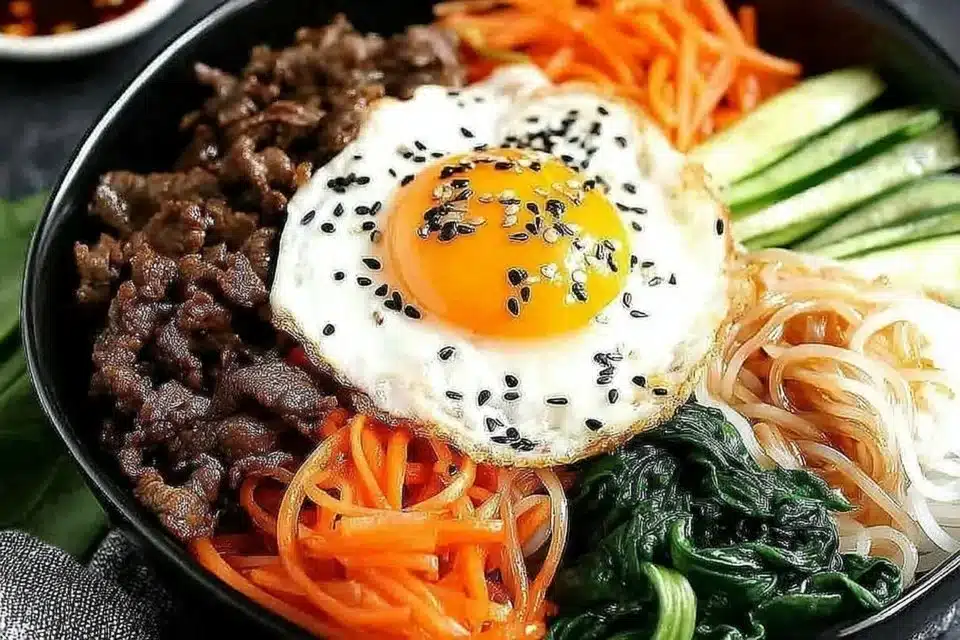
There’s a magical moment in every cook’s life, one that unlocks the essence of home and brings a rush of nostalgia. For me, that moment arrived when I first laid eyes on an Easy Korean Beef Bibimbap Bowl. The vibrant colors danced on the plate—richly marinated beef, expertly sautéed vegetables, and a perfectly fried egg perched on top, like the jewel in a crown that promised comfort. I remember that day vividly. I had wandered into a charming little café, drawn in by the enticing aromas wafting through the door, and in that instant, time dissolved. The crisp vegetables and earthy flavors whispered stories of Korea, drawing me deeper into a culinary love affair. It wasn’t just food; it was an experience, a shared connection to culture, family, and love.
As someone who believes food is an expression of identity, this Easy Korean Beef Bibimbap Bowl quickly transformed from a fleeting moment to a continuous journey in my kitchen. Each ingredient harmonizes beautifully, capturing not just flavors but emotions—the excitement of family gathered around the table or the soothing comfort on a quiet day. So, let’s roll up our sleeves and dive into this delightful dish together.
Flavor and Popularity
The Unique Flavor Profile of Easy Korean Beef Bibimbap Bowl
The Easy Korean Beef Bibimbap Bowl uniquely encapsulates an orchestra of flavors that all blend harmoniously. At its heart, you have the tender beef, marinated in a mixture of soy sauce, sesame oil, garlic, and sugar, delivering a umami punch that satisfies the senses. Complementing this are the sautéed vegetables—think fresh spinach, crisp carrots, and earthy mushrooms, each adding their distinct flair. And let’s not forget the warm bowl of rice that cradles all these delicious components.
A vital ingredient is the gochujang, a spicy and slightly sweet Korean red chili paste that elevates the dish with its complex heat and depth. The balance of textures—from the chewy beef to the crunchy vegetables—creates a medley that keeps you reaching for more. Each spoonful feels like a cozy embrace, making it a dish perfect for any occasion.
Why This Recipe Is a Family Favorite and Crowd-Pleaser
This dish has quickly become a family favorite, not only for its flavors but also for its versatility. It’s a wonderful way to clear out the fridge; almost any vegetable can find its home in the bowl. Families love creating their own versions, leading to joyful interactions and discussions about food preferences. This versatility means everyone can personalize their bibimbap—adding extra spicy gochujang or opting for a milder approach.
Moreover, its vibrant presentation makes it an eye-catching dish for gatherings, enhancing its status as a crowd-pleaser. The lively colors, combined with the delicious smells wafting through the kitchen, invite conversation and make dining feel special. Whether you serve it as a casual weeknight dinner or as part of a festive gathering, it always seems to resonate with those at the table.
Ingredients and Preparation
Essential Ingredients and Possible Substitutions
To create a mouthwatering Easy Korean Beef Bibimbap Bowl, you’ll need the following essential ingredients:
For the Beef Marinade:
- 1 lb ground beef (you can substitute with ground turkey or tofu for a vegetarian option)
- 4 tablespoons soy sauce
- 1 tablespoon sesame oil
- 1 tablespoon sugar
- 3 cloves garlic, minced
- 1 teaspoon ginger, grated
For the Vegetables:
- 1 cup spinach (or kale)
- 1 large carrot, julienned (bell peppers can work, too)
- 1 cup mushrooms (shiitake or button)
- 1 tablespoon vegetable oil
For Serving:
- 2 cups cooked rice (white or brown)
- 2 fried eggs
- 2 tablespoons gochujang
- Sesame seeds for garnish
Feel free to customize vegetables based on the seasons or what you have on hand. Broccoli, zucchini, and even radishes can be delightful additions!
Step-by-Step Recipe Instructions with Tips
Marinate the Beef: In a bowl, combine the ground beef with soy sauce, sesame oil, sugar, minced garlic, and ginger. Let it marinate for at least 30 minutes; longer if you have the time.
Cook the Rice: Prepare your rice according to package instructions. Using a rice cooker makes this effortless.
Sauté the Vegetables: In a large skillet, heat the vegetable oil over medium heat. First, add the carrots,
sautéing until they are tender (about 3 minutes). Then toss in the mushrooms, cooking until golden brown. Finally, add the spinach and sauté until wilted. Season lightly with salt and set aside.
Cook the Beef: In the same skillet, add the marinated beef, cooking over medium-high heat until browned and cooked through—about 6-8 minutes.
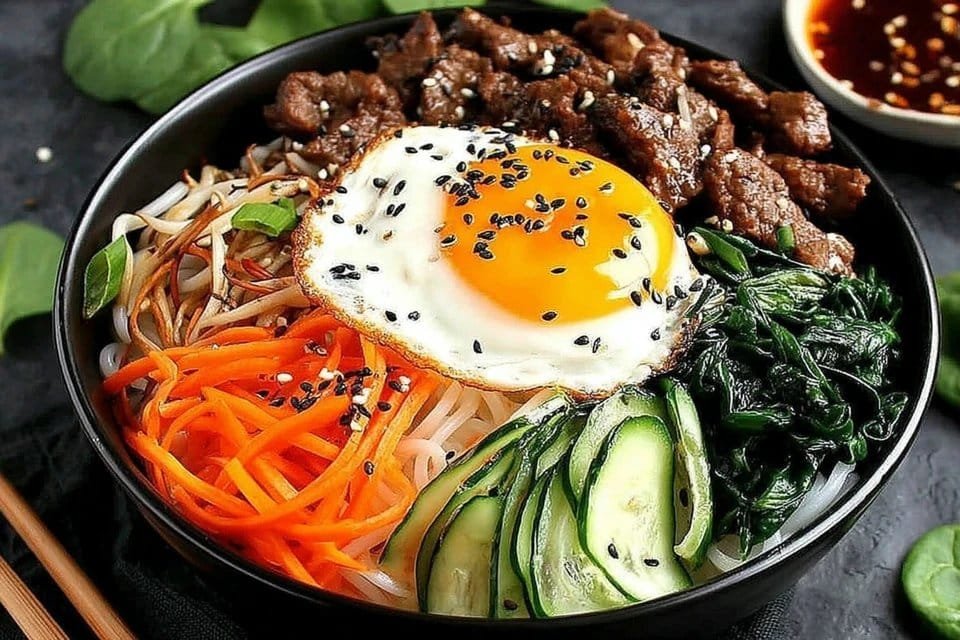
Assemble Your Bowl: Start with a warm bed of rice in each bowl. Artfully arrange the sautéed vegetables and beef over the rice. Top each bowl with a fried egg, a dollop of gochujang, and a sprinkle of sesame seeds.
Serve Immediately: Encourage everyone to mix their bowls thoroughly before taking their first bite, allowing the flavors to meld beautifully.
By adjusting cooking times and ingredient proportions, you can ensure that the Easy Korean Beef Bibimbap Bowl is perfect for your taste!
Cooking Techniques and Tips
How to Cook Easy Korean Beef Bibimbap Bowl Perfectly
Achieving the perfect Easy Korean Beef Bibimbap Bowl lies in the balance of flavors and textures. Here are some tips to help you succeed:
High Heat for Searing: When cooking the beef, use high heat to help achieve a lovely sear without steaming it. This tactic enhances flavor and texture.
Batch Cooking for Busy Weeknights: Preparing the beef and vegetables ahead of time makes weeknight dinners happen in a flash. Both components store well; just reheat and serve.
Ideal Rice Consistency: Use short-grain rice, as its sticky texture holds the bowl together nicely, making each bite delightful.
Common Mistakes to Avoid
Overcooking the Vegetables: It’s easy to lose that crunchy freshness, but remember, a quick sauté is all they need to retain vibrant flavor and texture.
Skipping the Marinade: The marinade is vital for infusing the beef with flavor. Even 30 minutes makes a difference, so don’t skimp!
Serving Cold: Bibimbap is best enjoyed warm. Take care to keep each component warm until assembly.
Health Benefits and Serving Suggestions
Nutritional Value of Easy Korean Beef Bibimbap Bowl
The Easy Korean Beef Bibimbap Bowl not only satiates your hunger but it also packs a nutritional punch. Lean beef is an excellent source of protein, which is vital for muscle growth and overall health. The variety of colorful vegetables contributes essential vitamins and minerals, boosting your immune system and promoting overall well-being.
Additionally, the fiber from the vegetables and whole grains can assist with digestion. Since this dish is so colorful, it offers a wide range of phytonutrients, catering to your nutritional needs while tantalizing your taste buds.
Best Ways to Serve and Pair This Dish
Serve your Easy Korean Beef Bibimbap Bowl hot, accompanied by refreshing sides like pickled vegetables or a vibrant cucumber salad dressed in sesame oil and vinegar. Pairing it with a light white wine or even a cold Korean beer can enhance the entire dining experience.
Whether enjoyed on a busy weeknight or as a festive gathering centerpiece, this bowl can surely be the star of the table.
FAQ Section
What type of mushrooms are best for Easy Korean Beef Bibimbap Bowl?
Shiitake mushrooms are a popular choice for their earthy flavor, adding depth to the dish. However, button mushrooms also work well, adding a milder taste and nice texture.
Can I use dried garlic instead of fresh?
While fresh garlic always provides a more potent flavor, you can use dried garlic. Just be aware that the intensity may differ, so adjust the quantity according to your taste.
How do I store leftover Easy Korean Beef Bibimbap Bowl?
Store leftovers in an airtight container in the refrigerator for up to three days. Reheating each component separately will help maintain texture and flavor.
Can I freeze Easy Korean Beef Bibimbap Bowl?
It’s best to freeze components separately. Freeze the beef and vegetables in airtight containers for up to three months, allowing the rice to be cooked fresh when you’re ready to enjoy it again.
Conclusion
If you’re like me and find joy in fresh, flavorful ingredients, creating your own Easy Korean Beef Bibimbap Bowl will undoubtedly become a cherished ritual. There’s something comforting about watching the vibrant colors come together, reminiscent of shared meals and laughter with loved ones. Trust me, you’ll want to make this again and again, making new memories with each delightful bowl. So don your apron, embrace the warmth of this dish, and enjoy the delicious adventure that awaits you in your kitchen!
for more recipes followo me in facebook and pinterest
for more recipes ; https://pastarush.com/baked-mac-and-cheese-with-breadcrumbs/